The Bear · https://the-bear.news/features/stars-on-sunday-a-glimpse-into-the-wonderful-world-of-the-john-player-league-143811
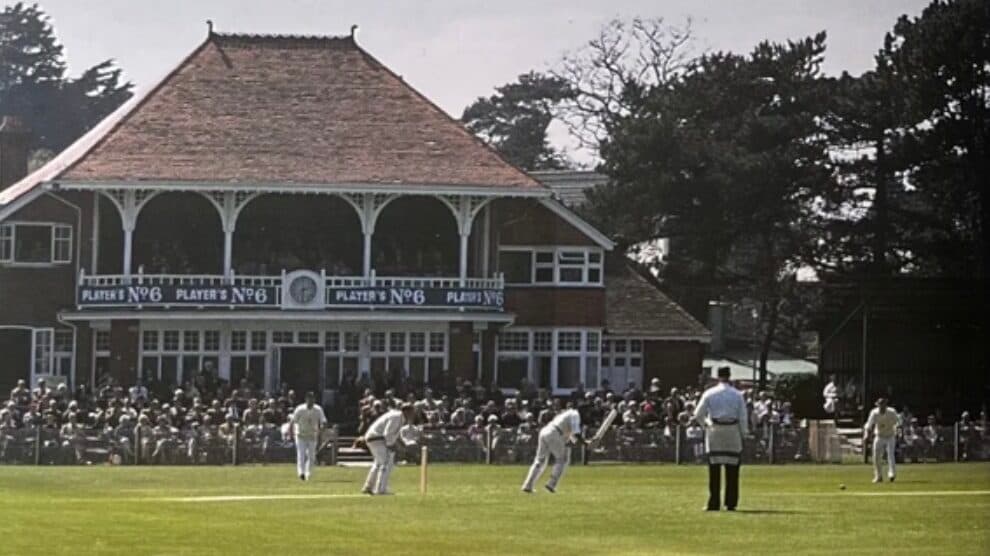

Stars on Sunday: A colourful glimpse into the wonder years of the John Player League
23.09.26, 20:29 Updated 02.10.26, 20:33
Remember the 70 and 80s? Remember cricket in those decades?
I need to be more specific. You see, whenever we’re asked to recall any sport in a particular era, there’s a temptation to trot out a series of facts or images that might be true and faithful but are hardly intimately connected with the topic under discussion.
The name of the Prime Minister is a favourite. The singer or song that was No1 in the charts for much of a particular year is another. Chuck in a favourite food, especially if it’s no longer available – say Vesta Chow Mein – and the job’s a good ‘un.
Except that it isn’t. We haven’t been able to place these events within the precise context of the cricket we were watching. So let me be more precise, still. Remember cricket on TV on Sunday afternoons in the 70s?
Now we’re getting there – or at least those of us born before 1975 might be.
Suddenly we have matches that could begin at 2.00 and be over by 7.00. We have John Arlott’s humane lyricism contrasting with Jim Laker’s laconic counterpoint. And for some readers of The Bear, we have John Jameson biffing the ball down the ground or Tom Cartwright loping in to deceive batsmen with casual ease. Are you already tracking back through rich memories?
If so, Stars on Sunday is the book for you. Inspired by his own connections to 40-over Sunday cricket, Mark Sands has written a history of John Player League, a competition that ran from 1969 until 1986, with minor tweaks to its title in its first year and again in its final three.
It was a competition that attracted large crowds and probably saved some clubs from the receivers. And many counties bought into the JPL at a time when other clubs thought it 'clown' cricket or not cricket at all. Warwickshire won it in 1980, when Andy Lloyd’s 557 runs and Gladstone Small’s 25 wickets took them to the title with 11 wins and a game to spare.
“It was the first introduction I had to county cricket and it led me into the world I love today, said Sands, a Lancashire fan, although his book is for supporters of nay counties or none at all. “A working title for the book was Gateway to the Game because that’s how it felt really.
“My first-ever game was in the John Player League. My dad was more a football supporter but he thought a JPL game would be good for father-and- son bonding. That was in the mid-70s and when one of the first things you see is Clive Lloyd hitting the ball onto the railway tracks at the Warwick Road End, you’re hooked really. That was my route into the game and the JPL always had that sort of pull.”
If Old Trafford was the spiritual home of the Sunday afternoon thrash, other venues like Canterbury and Chelmsford were soon vying for the title and players were adjusting their techniques to the 40-over format.
No one scored more runs in the JPL than Dennis Amiss, who rattled up 6861 in his career and 542 in the title-winning year. Norman Gifford, who ended his career at Edgbaston, is fourth on the wicket-taking list with 268 and Eddie Hemmings, who spent 13 seasons at the club is tenth on 222.
“One of the things that inspired me to do the book was a conversation I had during a Championship match at Blackpool,” said Sands.
“The talk got more animated when they were talking about the John Player League games they’d watched home and away and their good memories. And there was no history of the JPL and I wondered if there was a narrative there, a tale to tell.”
Sands found there were many stories worth telling.
One of the more fascinating is how the JPL was developed from the International Cavaliers matches that were also broadcast, although with nothing like the ballyhoo that its successor inspired. And Sands’ book also prompted a smile of recognition from this reader, who recalled how he suddenly looked forward to a day that, until the JPL, had been characterised by deep sobrieties.
I used hymn numbers my dad had picked up in an auction to chronicle the games on a piece of hardboard. But I was blithely unaware of the deeper narratives that Sands explores.
“I learned plenty of factual things,” he said. “I didn’t know too much about the Cavaliers or about how elements of the JPL and some of the regulations were already in place. I certainly learned how it brought light to Sundays – the JPL gave you half a day extra on your weekend. It enlivened Sunday afternoons and showed to people that they could enjoy themselves on a day that was often very quiet. Everything was closed and the pubs were shut.”
There was also tactical evolution. At least, there was from counties who gave the JPL house-room. At the same time, it is instructive to consider the scores in any of the first five years of the JPL and those racked up in today’s T20. The difference is often only 30-40 runs.
“It was a case of play normally for the first half of the innings, keep wickets in hand and then we can go gangbusters in the last ten overs or so,” suggests Sands.
“There was no sense of really pushing from ball one. But people did try things: Stuart Turner of Essex was up and down the order and John Snow opened for Sussex a couple of times. There was experimentation here and there. Gradually batsmen like Northamptonshire’s Wayne Larkins began to attack from the start. And it always felt like a good battle between bat and ball."
Although it's hard to see much evidence of balanced struggle in some T20 games, we might remember that limited-overs cricket has been developing for over half a century.
Or to put the point more radically, if you want to trace the origin of the IPL, think back beyond the JPL; think back over 63 years to the moment when Leicestershire’s Terry Spencer bowled to Lancashire’s Brian Booth in the first Gillette Cup match on May 1, 1963.
Once we had a professional competition when the side that scored most runs won the match regardless of wickets lost, the game changed for good – even if it did take four generations to get to the Birmingham Phoenix.
Not that wickets don’t matter in what is now white-ball cricket. That was another thing that Sunday League players grew to understand more fully.
“There was a school of thought that it was vital to keep the runs down whereas others realised it would be useful to knock over the top three or four fairly quickly,” said Sands.
“So, defence had to be balanced with aggression. Spinners like Simmons and Derek Underwood were important. You didn’t need to buy wickets in the JPL; you could actually take them and of course fielding improved hugely. Another thread was the careers of Underwood and John Lever who took exactly the same number of wickets [344] and took their 300th wicket on the same day.”
All of which means that it’s well worth your time giving Stars on Sunday a spin. You’ll be reminded of players you’ve forgotten and grounds like Darley Dale, on which it is difficult to believe county cricket was ever played.
But we were less picky in those days. And anything was better than nothing I suppose.
Stars on Sunday is now available to purchase from most major book sellers. In order to find out more information and get your own copy, please head to www.starsonsundaybook.com and check out the list of available online retailers.