
Thanks For The Memories: The Story of a Warwickshire Village Cricket Team
10.06.26, 17:00 Updated 11.06.26, 12:31
Aaron Viles
I’ve always enjoyed my trips to Hockley Heath.
Situated five and a half miles to the south of the bustling market town of Solihull, the charming Midlands village really is an interesting place to visit, especially if you’ve got a bit of spare time on your hands during a warm Summer’s day.
In addition to the classic village amenities like the local pub (The Wharf Tavern), the neighbourhood bakery (Marsin’s) and the community social space (King George VI Memorial Hall), Hockley Heath is also home to a McLaren and Rolls Royce showroom as well as the Vintage Sports Car Club, a social and competitive motor racing organisation that’s existed since 1934.
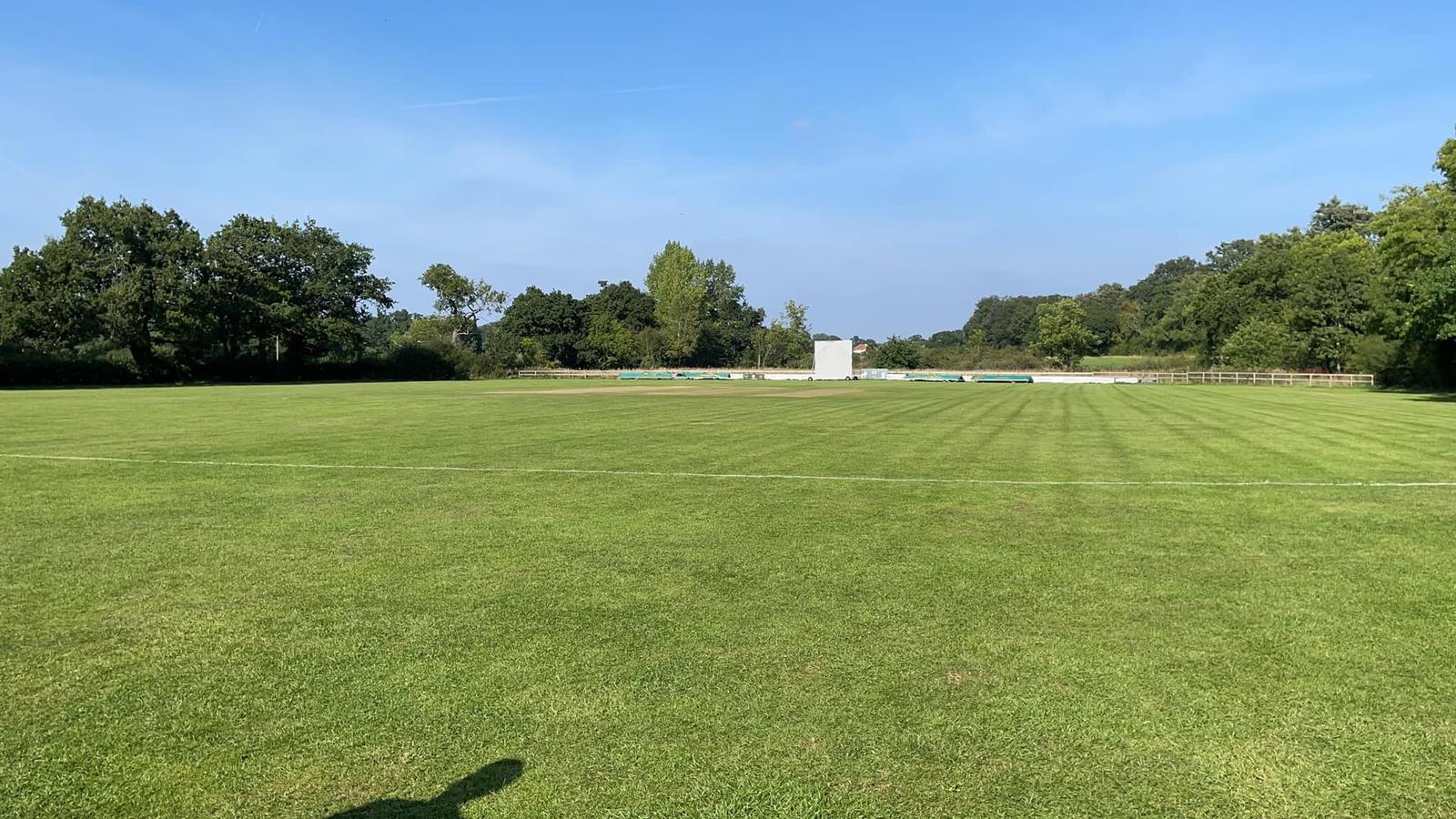
Aside from its intrinsic link to the automotive industry though, the settlement has also produced a truly remarkable local cricket team with over 150 years of rich and fascinating history to its name, Hockley Heath CC.
Back in March, I was informed by Terry Wright – an avid Warwickshire fan and former player at Hockley Heath – that lifelong club member Dave Bullivant had written a book charting the history of his local village cricket team in its entirety, from the original pioneers of the side who first took to the field against Henley-in-Arden in 1874 to the modern players who plied their trade at Grove Lane and various other Midlands grounds in the 2020’s.
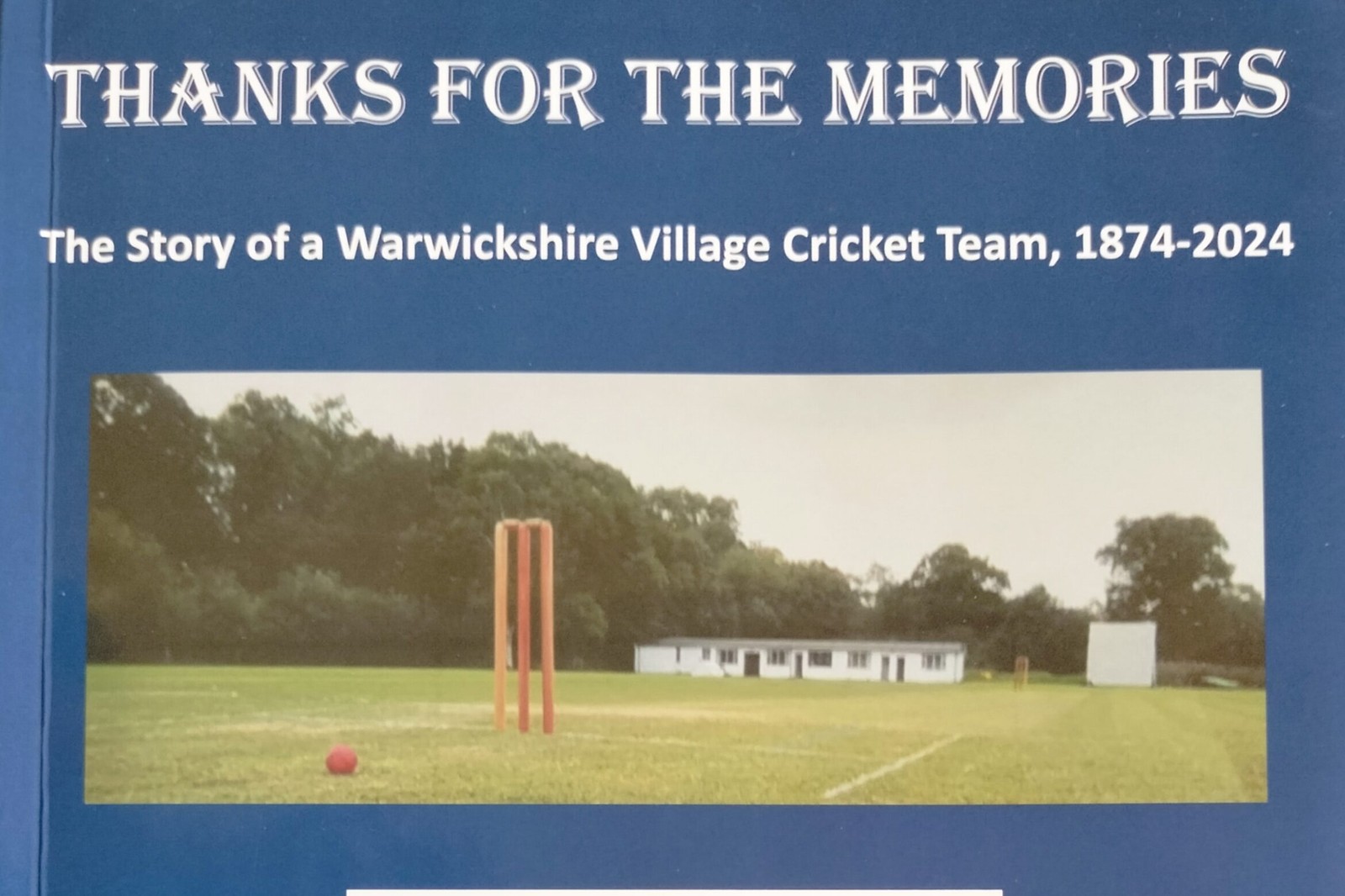
Titled ‘Thanks For The Memories: The Story of a Warwickshire Village Cricket Team’, the 270-page book serves to shine a greater light on the incredible heritage of Hockley Heath Cricket Club, ranging from individual player biographies to in-depth accounts of major events and particular league and cup matches that have shaped the course of the club’s trajectory over the years.
Starting with the player biographies, there’s a plethora of brilliant stories scattered throughout the various pages, with the sections about Gerald White, Bryan Curtiss, Phil Dawes and a certain Terry Wright offering a fascinating insight into the character, life experiences and journeys taken by some of the club’s finest cricketers from across the generations.
There’s also mention of Alfred Barbery, a right-arm fast bowler who - in addition to representing Warwickshire in a pair of First Class matches in 1906 and 1907 – owned a local bakery in the area and represented Hockley Heath in the 1930’s, as well as the late, great Bears legend M.J.K. Smith who featured for the club in a match against Moreton-in-Marsh in 1976.
In addition to these fascinating player insights, the book also features a whole host of wonderful stories about memorable cricket matches that have taken place across competitions over the decades.
Starting with that very first fixture against Henley-in-Arden in 1874, which actually saw Hockley Heath bat twice after falling 22 runs short of their desired target of 56, the year-by-year accounts that follow provide an extraordinary glimpse into the continued evolution of the club, and indeed the local cricketing landscape, as season after season came and went.
Admittedly, some of the earlier reports aren’t quite as detailed as the later ones – sadly due to the lack of archived reports and scorecards that still exist from those initial summers – but the recurring mention of local clubs that have since been lost to the past such as Wootton Wawen, Ullenhall, Nechells and Wroxall make them an incredibly interesting read nevertheless.
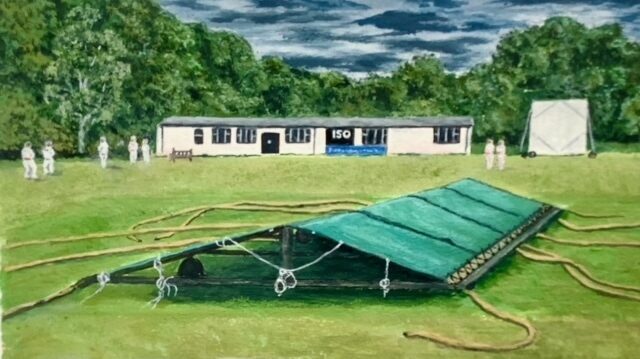
On the subject of interesting reads, my favourite year to learn about whilst trawling through the year-by-year accounts was 1977, and for very good reason.
Right off the bat, there’s a fantastic recollection of a game against Robin Hood (the cricket team that is, not the legendary outlaw from Medieval folklore) which saw Richard Farmer, the son of the local vicar, run out for exactly 100.
As to why that particular recollection is so memorable, I’ll leave it to Tony Hawkeswood’s anecdote from page 80 to explain:
“Unusual incident; Richard Farmer’s maiden hundred and run out. This was entirely my fault. I went in just before tea with Richard in the nineties. A few minutes later their umpire announced the last over before tea. I believed that Richard was on 97 but in fact he was on 99. He drove the ball to long-off and he completed the run to loud applause which he was acknowledging as I turned for a second to keep him on strike. He halted his celebration and began to run but was beaten by a good throw, much to my embarrassment.”
If that doesn’t sound like the makings of an instantly viral club cricket clip that would be doing the rounds on social media in 2026, then I don’t know what else quite does.
Somehow though, the second tale from the 1977 section manages to be equally brilliant to read about, albeit for slightly different reasons.
At the start of an away trip to fellow Warwickshire side Fillongley, Hockley Heath had just 9 players available to take to the field. Unsurprisingly, after winning the toss, the visitors opted to have a bat first but soon found themselves struggling on a rather precarious score of 60/5 within the opening 90 minutes of the game.
Now at this stage, things didn’t exactly look promising for Hockley Heath, or at least they didn’t until the aforementioned Bryan Curtiss arrived with one of his friends from the pub. In normal circumstances, that wouldn’t have been a particularly noteworthy thing to mention, but in this instance, that friend just so happened to be former Warwickshire and Cambridge University wicketkeeper Jamie McDowall.
Whilst Hockley Heath ultimately went on to lose the game by 2 wickets, McDowall stood up to the stumps against every single bowler on a tough playing surface, regardless of their pace, and was whipping the bails off with such regularity that it felt as though he was appealing for a stumping ‘virtually every over’. The former Bears gloveman, who usually turned out for Knowle and Dorridge in the Midlands Club Cricket Championship at the time, came into the dressing room afterwards and believed that he had taken a whopping 13 stumpings over the course of the game, although only 4 of them would officially be counted in the scorebook.
Even all these years later, judging by the anecdotes from the book at least, I think it’s safe to say that he left an instant impression on both his teammates and, indeed, his opposition on that particular day in North Warwickshire.
It’s tales like these which give Hockley Heath Cricket Club an instantly-relatable sense of identity and character – especially to those who have spent many a weekend chasing balls to the boundary on the village green – and it’s something which I imagine Dave was keen to relay to the reader alongside the more formal aspects of club cricket life such as player statistics, financial accounts and the general day-to-day administrative duties performed by those on the committee.
Something else which Dave was very keen to stress at length throughout the latter stages of the book was the importance of the future.
Back in 2007, following a consistent lack of player availability and compounding monetary strife, Hockley Heath Cricket Club effectively ceased to exist. Thankfully, as a result of a merger with Dorridge Cricket Club - which led to the creation of Dorridge and Hockley Heath CC in the Cotswold Hills League – the village retained a major pillar of its sporting identity, but questions still remained over the long-term viability of cricket being played under the Hockley Heath name following a noticeably lean period of player recruitment in the mid-2010’s.
In a staggering turn of events however, all of this would change rapidly come the turn of the new decade.
At the culmination of a tireless recruitment drive from eventual 1st XI captain Richard King during the Covid-impacted Summer of 2020, Hockley Heath would be reformed as a nomadic cricket team.
The first game back under the HHCC name would sadly end in a heavy defeat against Hammerwich in Staffordshire, but the months that followed would lead to an extraordinary uptick in fortune, with the club attracting enough players to field 4 separate playing elevens during the 2021 season. For some further context, the club had never fielded more than 3 concurrent playing XI’s at any stage during the previous 146 years of their existence on the Warwickshire club circuit.
Whilst the club has since returned to fielding 3 teams (1 Saturday XI and 2 Sunday XI’s) instead of 4 and still don’t have access to a permanent home ground, the future looks increasingly bright both on and field for Hockley Heath, and one can only hope that they can return to their spiritual home at Grove Lane at some point over the months and years that follow.
Sadly though, an intrinsic part of the club’s fabric won’t be here to witness that journey with us.
Early last month, following a lengthy battle with illness, Dave Bullivant, the author of ‘Thanks For The Memories’, passed away.
Whilst I never knew Dave personally, unlike those who had the pleasure of sharing stories with him at Grove Lane, I admire the sheer amount of work that went into the creation of this book and his unwavering commitment and dedication to preserving the legacy and history of the club that meant so much to him.
At times, you could argue that some of the quotes and stories go into slightly too much detail – and do include some ‘industrial language’ as Dave himself puts it in the introduction – but I suppose that’s part and parcel of capturing a particular moment in history in the manner in which it actually happened. He even mentions this concept on page 14, stating that he wanted to ‘tell it as it is’ as opposed to generating a condensed narrative of events based around his own perspective and opinions of the matter at hand.
In this regard, you can tell that ‘Thanks For The Memories’ was created with the intention of being a labour of love, a lengthy passion project which took him countless hours to produce alongside an entire ensemble of fellow HHCC players, friends and family members who wanted to tell the story of the individuals who had contributed so much to their local village cricket team to the very best of their ability.
Dave also completely waived his rights to any proceeds from the sales of the book, instead opting to give 100% of the profits to the club that had provided him with so much joy throughout the duration of his life. Hockley Heath CC and the individuals associated with it played an integral role in shaping his lived experience on this earth, and he did everything in his power to ensure that it would continue to serve that same role for future generations in the local area too.
It’s on that note that I’d like to leave you with some closing thoughts from an individual who knew Dave Bullivant better than most. The man who brought this book to my attention in the first place back in March; Terry Wright.
With Terry’s express permission, here’s an excerpt from the eulogy that he wrote for his long-time friend and fellow stalwart of Hockley Heath Cricket Club:
The Captain’s Log was just one small part of Dave’s role as an author. His dedication to Hockley Heath Cricket Club produced a masterpiece of cricketing and social history. Dave’s book, ‘Thanks for the Memories’, documents the history of the Club from 1874 to the present day. Dave first started researching the book over 50 years ago.
The book also documents Dave’s own involvement as player, Grove Lane ground developer, Club captain, secretary and, more recently, Club Chairman. He could have written much more about his own achievements but, typically, modesty prevailed.
One of the two chapters that I wrote for the book described an imaginary trip to the Elysian Fields made by someone named Gerry Shedd. There he met legendary Hockley Heath Club captain Bryan Curtiss, whom Dave idolised, to discuss a match between the best players who had passed on and those of us left behind. It was, I thought, a neat way of highlighting, at the end of the book, the best players ever to pay for the Club. Dave helped me write it and I thought we did a good job.
But on reflection, I think I got it all wrong. What made Bryan Curtiss a brilliant captain was not his ability to lead the best players to victory. It was his gift of captaining a team of mixed ability, getting everyone (even the novices) into the game and still managing a win. And Dave fitted perfectly into that scenario.
Garry Eathorne in the book describes Dave as the ultimate trier. Whether with the bat, at short leg or (occasionally) with the ball, Dave could be relied on to give 100%. He was just the sort of man that Bryan Curtiss loved having in his side. So, the mythical match in the Elysian Fields should have reflected that – not “the best against the best” but two teams of mixed skills, all giving everything in the cause of Hockley Heath Cricket Club. And if such a match were to be played, where would Dave Bullivant be? Make no mistake, he would be right beside Bryan, not only giving his all but urging everyone else on too.
There is little more that I can say other than that I shall miss Dave terribly.
In our last conversation, just a couple of days before he died, he was urging me on to make sure I didn’t mess up in my funeral speech. Well, Dave, I hope that I at least came close to meeting your expectations. May you, as you so richly deserve, rest in peace – except that you need to get your pads on – I hear that Curtiss wants you to go in at number four and get some quick runs.
All of us here at The Bear would like to place on record our thanks to Terry and to HHCC for their help with the historical research for this piece and would also like to pass on our heartfelt condolences to Dave’s family and friends during these incredibly difficult times.
Thanks for the Memories: The Story of a Warwickshire Cricket Team was published by Hockley Heath Cricket Club in association with Max Books and copies of the book are available to purchase from Terry Wright via terrylawsonwright@gmail.com for £25.00, with all of the proceeds going directly to the club.
Related Topics
Aaron Viles Editor